
San Antonio Mid-Term Furnished Housing Guide
San Antonio Housing, Mid-Term Rentals, Furnished Corporate Housing, Military PCS, Construction Crews, Insurance ALE, Travel Nurses
San Antonio Mid-Term Furnished Housing: The Complete Guide for Construction Crews, Military Families, Insurance Coordinators & Traveling Professionals
If you’re trying to solve housing in San Antonio for the next 30–90+ days, you’ve probably already discovered this the hard way: hotels are fine for a weekend, tolerable for a week, and miserable by week three. Whether you’re running a construction crew, navigating a PCS, placing a displaced family, or starting a 13‑week contract, what you really need is a temporary home—not another swipe of the key card at a noisy hotel down the highway.
1. The San Antonio Extended-Stay Problem
Picture this. A construction project manager checks in a four‑person crew at a budget hotel off I‑10. Two double beds per room, microwaves that barely fit a takeout box, and nowhere to spread out drawings or answer emails in peace. It works for a few nights. By day 18, everyone is exhausted, eating fast food, and burning through per diem with nothing to show for it but laundry bags and lost receipts.
Across town, a family is out of their home after a water loss. Their insurance ALE coverage is active, but they’ve been placed in two adjoining hotel rooms “for now.” The kids are doing homework on the bed. Groceries? Not an option. Mom is trying to keep some sense of normalcy with nothing more than a mini‑fridge and a shared hallway microwave that always seems to be in use when they need it most.
On the west side, a military spouse has just arrived in San Antonio ahead of a PCS to Joint Base San Antonio. The service member is still finishing training at a previous duty station, so spouse and kids are parked in an extended‑stay hotel near Lackland. They’re trying to register for school, find the right gate, and figure out traffic on 1604—all while living out of suitcases and praying the dog doesn’t bark every time someone walks down the hallway at midnight.
Meanwhile, a travel nurse just landed a 13‑week contract downtown. The hospital is great, the unit is busy, and the shifts are long. But after three consecutive 12s, walking back into a small, dark hotel room with no real kitchen and spotty Wi‑Fi doesn’t exactly feel like recovery. There’s nowhere to meal prep, nowhere to decompress, and nowhere to actually live between shifts.
Four different scenarios. One shared problem: hotels are designed for short stays, not real life. Once you cross that two‑week mark, the hotel model starts to break down—financially, logistically, and emotionally. That’s where mid‑term furnished housing in San Antonio comes in.
2. Who Needs Mid-Term Furnished Housing in San Antonio?

A real kitchen cuts costs, keeps crews and families healthier, and restores daily routine.
Construction Companies & Crews (30–90+ Day Job Sites)
For construction project managers, housing is more than a line item—it’s a productivity tool. When your crew is scattered across multiple hotel rooms, dealing with noisy neighbors and no place to cook, you pay for it in overtime, morale, and turnover. A mid‑term furnished house near the job site means:
Separate bedrooms so everyone actually rests between shifts
Full kitchen for bulk groceries instead of daily takeout
Space to store tools, coolers, and PPE securely
Military Families & Service Members (PCS & TDY to JBSA)
Joint Base San Antonio—including Lackland, Randolph, and Fort Sam Houston—brings a constant flow of PCS and TDY traffic. On‑base lodging isn’t always available, and off‑base hotels can quickly eat through BAH. Mid‑term furnished housing gives military families:
A stable address while waiting on on‑base or permanent housing
Pet‑friendly options so the whole family moves together
Proximity to gates, schools, and everyday errands
Displaced Families Using Insurance ALE Benefits
When a fire, water loss, or other covered event forces a family out of their home, insurance adjusters and ALE coordinators are under pressure to find safe, comparable housing quickly. Hotels are easy to book but hard to live in for months. A mid‑term furnished rental that understands ALE billing can provide:
Separate bedrooms and living areas for privacy and sanity
Laundry, full kitchen, and yard space to keep life on track
Direct communication and invoicing that align with ALE guidelines
Traveling Professionals: Nurses, Consultants, Remote Workers & Relocators
San Antonio’s rental market in 2026 remains more affordable than buying, with average rents typically between about $1,200 and $1,600 a month according to multiple market reports. That makes the city attractive for 13‑week hospital contracts, corporate assignments, and trial relocations. A mid‑term furnished home gives professionals:
Reliable, high‑speed Wi‑Fi and a dedicated workspace
Quiet, residential neighborhoods instead of high‑traffic hotel corridors
A chance to “test‑drive” life in San Antonio before making a permanent move
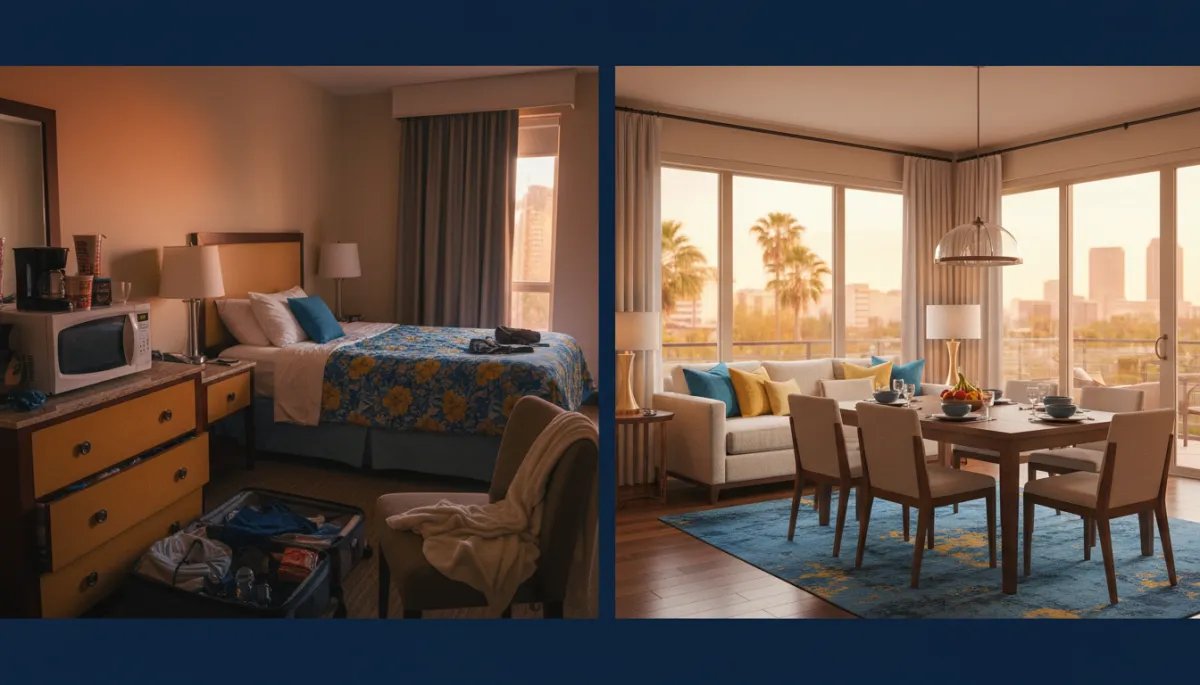
Past two weeks, a real home almost always beats a hotel on comfort and cost.
3. What Mid-Term Furnished Housing Actually Is (and What It Isn’t)
“Mid‑term furnished housing” sits in the sweet spot between a nightly Airbnb and a 12‑month lease. In San Antonio, that usually means a 30‑day minimum stay with the option to extend month‑to‑month as your project, PCS timeline, or claim evolves. Done right, it should feel like walking into a home that’s already set up for you.
What It Is
Fully furnished: Beds, sofas, dining table, TVs, linens, cookware, basic kitchenware—already in place when you arrive.
Full kitchen: Real stove, oven, fridge, and enough counter space to actually cook and pack lunches for the site or the unit.
In‑unit laundry: Washer and dryer inside the home or apartment—critical for crews, kids, and healthcare workers.
Utilities simplified: Wi‑Fi, electricity, water, and often lawn care and pest control bundled into one predictable monthly payment.
Flexible 30‑day+ leases: Stay as long as the project, assignment, or repairs require—without locking into a year‑long lease.
What It Isn’t
Not a random Airbnb: You’re not gambling on a host who’s used to weekend tourists and might cancel last‑minute when they get a better offer.
Not a sublet: No chasing down someone’s roommate for a key, unclear rules, or wondering if the landlord even knows you’re there.
Not an extended‑stay motel: You’re not living out of a single room with a hot plate and paying hotel tax on top of it.
In short, mid‑term housing is a real home for a defined temporary period. You know it’s temporary—but it doesn’t have to feel temporary every time you walk through the door.
4. The Cost Conversation: Hotels vs. Furnished Monthly Rentals

Crews, military families, ALE placements, and traveling pros all benefit from one housing solution.
Let’s talk numbers. The San Antonio rental market in 2026 has cooled slightly, with many sources showing average rents between roughly $1,200 and $1,600 per month. Meanwhile, nightly hotel rates—even at modest extended‑stay brands—often land in the $90–$140 per night range before taxes and fees. Over a 60‑ or 90‑day stay, that difference adds up quickly.
Example: Two Hotel Rooms vs. One Furnished Home (60 Days)
Imagine a crew of four sharing two hotel rooms at $110 per night per room (a conservative extended‑stay rate in many parts of San Antonio):
$110 × 2 rooms = $220 per night
$220 × 30 nights ≈ $6,600 per month
Compare that to a well‑located, fully furnished 3–4 bedroom home at, say, $3,200–$3,600 per month with utilities and Wi‑Fi included. Even at the higher end, you’re saving roughly $3,000 per month—and that’s before you factor in food and productivity.
The Hidden Costs of “Cheap” Hotel Stays
Eating out every meal: Even modest fast‑casual meals at $12–$15 per person, twice a day, for four people, can easily add $1,500–$2,000 to a 30‑day stay compared with cooking at home.
Laundry: Coin‑op machines and laundromats cost money and—more importantly—time. In‑unit laundry means crews and families aren’t wasting hours each week sitting in a laundry room.
Lost productivity: Poor sleep, no quiet workspace, and constant disruption impact job performance, safety, and decision‑making—costs that don’t show up on a lodging invoice but absolutely hit your bottom line.
For ALE coordinators and adjusters, a mid‑term furnished rental can also be more defensible from a cost‑control standpoint. You’re providing a comparable standard of living to the insured’s home, often at a lower overall cost than multiple hotel rooms and per‑diem‑driven restaurant expenses over months of displacement.
5. What to Look For in a San Antonio Mid-Term Rental Provider
Not all furnished rentals are created equal. San Antonio has everything from individual owners listing a spare house to full‑service corporate housing providers. Here’s what construction managers, military families, insurance coordinators, and traveling professionals should prioritize when choosing a partner.
Professional Management (Not a Random Landlord)
You want a team that understands mid‑term stays as a business, not a hobby. That means clear processes, documented policies, responsive communication, and properties that are maintained like assets—not afterthoughts.
Verified Amenities & Clear Photos
For a 30‑ to 90‑day stay, details matter. Look for accurate, up‑to‑date photos and a written amenities list that spells out:
Number and size of beds and bedrooms
Kitchen equipment (full‑size appliances, cookware, dishes, coffee maker)
Laundry setup (in‑unit vs. shared vs. off‑site)
Parking details for work trucks, trailers, or multiple vehicles
Flexible Lease Terms & ALE Compatibility
Construction schedules slip. Repair timelines change. TDY orders get extended. Claims get re‑scoped. Your provider should be ready for that reality with:
30‑day minimums with simple month‑to‑month extensions
Clear notice requirements for move‑out or extension
Willingness to work with ALE departments on documentation and billing
Pet-Friendly Options, Reliable Wi‑Fi & Strategic Locations
For many military and displaced families, leaving pets behind is a non‑starter. For remote workers and travel nurses, bad Wi‑Fi is a deal‑breaker. And for crews and consultants, long commutes cost real money. Prioritize:
Clearly stated pet policies and fenced yards where possible
High‑speed internet with enough bandwidth for work, streaming, and kids’ homework
Proximity to JBSA gates, hospitals, major employers, or job sites to keep commute times and fuel costs manageable

When housing feels like home, people rest better, work better, and heal faster.
6. Legacy Crashpads: San Antonio’s Furnished Housing Solution
Legacy Crashpads exists for one reason: to make mid‑term housing in San Antonio simple, predictable, and genuinely comfortable for the people who need it most—construction crews, military families, displaced policyholders, and traveling professionals. Instead of piecing together a solution from random listings and hotel chains, you get a single, experienced partner focused on your specific type of stay.
What Legacy Crashpads Offers
Fully furnished, move‑in‑ready homes across key San Antonio neighborhoods, with modern decor, stocked kitchens, and in‑unit laundry.
Flexible 30‑day+ stays designed around PCS timelines, project schedules, ALE extensions, and contract lengths.
Utilities and Wi‑Fi streamlined into simple, predictable billing so you’re not juggling multiple accounts for a temporary stay.
Military‑savvy support that understands PCS stress, gate access, and the realities of JBSA life.
ALE‑friendly processes for adjusters and coordinators who need fast responses, clear documentation, and properties that meet policyholder needs.

The right mid-term home turns a stressful transition into a manageable season.
How to Get Started with Legacy Crashpads
Whether you’re booking for yourself, your crew, or on behalf of a policyholder or employee, the process is straightforward:
Share the basics: Dates, number of occupants, pets, target area (near JBSA, downtown hospitals, a specific job site, or corporate office), and any special requirements.
Review tailored options: Legacy Crashpads will match you with available homes that fit your needs and budget, with clear photos and amenity lists.
Lock in your stay: Sign a straightforward agreement, confirm payment or ALE arrangements, and receive detailed check‑in instructions before you arrive.
From there, your housing stops being a daily headache and becomes what it should be: a stable base while you focus on the project, the mission, the claim, or the assignment in front of you.
📌 Key Takeaway: If your San Antonio stay is longer than two weeks and shorter than a year, mid‑term furnished housing will almost always beat hotels on cost, comfort, and sanity—for crews, military families, displaced policyholders, and traveling professionals alike.
When you’re ready to trade hotel keys and takeout receipts for a front door and a real kitchen, reach out to Legacy Crashpads and explore your San Antonio mid‑term housing options. One conversation can turn a stressful extended stay into a season that actually works—for your budget, your schedule, and the people depending on you.
Disclaimer: Content published by Legacy Crash Pads is provided for general educational and informational purposes only and should not be considered legal, tax, insurance, real-estate, financial, or other professional advice. Information may change and may not apply to every individual, company, project, insurance claim, military assignment, or housing situation.
Property availability, pricing, amenities, locations, policies, minimum-stay requirements, and housing eligibility are subject to verification and may change without notice. Nothing published on this website constitutes an offer, promise, guarantee of housing, guarantee of results, or contractual commitment.
References to insurance companies, ALE providers, military installations, government agencies, employers, construction companies, staffing companies, or other third parties do not imply affiliation, sponsorship, endorsement, or approval unless expressly stated. Readers should independently verify all information and consult the appropriate qualified professional before making legal, insurance, housing, tax, financial, or business decisions.